
Last updated:
Vestibulodynia Treatment Options: A Comprehensive Guide to Finding Relief
Explore evidence-based treatment options for vestibulodynia — from topical therapies and pelvic floor physiotherapy to dilators, nerve blocks, and CBT. Learn how to build an effective care team and what to expect from recovery.

Medical disclaimer: This article is for informational purposes only and does not constitute medical advice. Vestibulodynia is a medical condition that requires professional diagnosis and management. Always consult a gynaecologist, vulvar pain specialist, or pelvic floor physiotherapist before beginning any treatment.
Vestibulodynia is one of the most common causes of painful sex in premenopausal women — yet many women live with it for years before receiving a correct diagnosis. The condition involves persistent pain at the vaginal opening (vestibule), and it can make everything from intercourse to tampon insertion to sitting for long periods feel impossible.
The good news: vestibulodynia is treatable. Several interventions have supportive evidence, although the overall treatment literature is still uneven and many studies are small.[4] This guide covers what vestibulodynia is, how it differs from related conditions, the full range of treatment options, and how to build a care team that works for you.
What Is Vestibulodynia?
Vestibulodynia — sometimes called vulvar vestibulitis syndrome (VVS), though this older term is falling out of use — is characterised by pain localised to the vulvar vestibule: the area of tissue immediately surrounding the vaginal opening [1].
The pain is typically:
- Provoked — triggered by touch or pressure (intercourse, tampon insertion, tight clothing, prolonged sitting)
- Burning, stinging, or raw in quality
- Persistent — lasting three months or longer
- Not explained by another identifiable condition (such as infection, dermatological disease, or neurological disorder)
Some women also experience unprovoked vestibulodynia, where pain occurs spontaneously without any contact. A subset of women have both provoked and unprovoked symptoms.
Population-based studies suggest that symptoms consistent with vulvodynia affect about 8% of women; provoked vestibulodynia is a common localised subtype, but precise prevalence estimates vary between studies [2].
How Does Vestibulodynia Differ from Vulvodynia and Vaginismus?
These three conditions are distinct, though they frequently overlap and can be confused with one another.
Vestibulodynia vs. Vulvodynia
Vulvodynia is a broader term referring to chronic pain of the vulva lasting at least three months without an identifiable cause. Vestibulodynia is a subtype of vulvodynia — specifically, vulvodynia localised to the vestibule. Other forms of vulvodynia may involve pain across the entire vulva (generalised vulvodynia) or in other specific regions.
Vestibulodynia vs. Vaginismus
Vaginismus is characterised by involuntary contraction of the pelvic floor muscles that makes penetration difficult or impossible. While vestibulodynia is primarily a pain condition of the vestibular tissue, vaginismus is primarily a muscular response — though it is often triggered or worsened by the pain of vestibulodynia.
In practice, many women have both: vestibulodynia causing pain at the entrance, which triggers pelvic floor guarding (vaginismus) as a protective response. Effective treatment often needs to address both the tissue sensitivity and the muscle dysfunction simultaneously.
For a detailed exploration of vaginismus and its treatment, see our guide on understanding vaginismus.
What Causes Vestibulodynia?
The exact cause of vestibulodynia is not fully understood, but current research points to several contributing factors:
Nerve Proliferation and Sensitisation
Biopsy and histologic studies suggest that some women with vestibulodynia have increased nerve density, inflammatory changes, or both in painful vestibular tissue [3]. This supports the idea that peripheral tissue changes can contribute to symptoms, even though the biology is not identical in every patient.
Inflammation and Immune Response
Some women show evidence of chronic, low-grade inflammation in the vestibular tissue, with elevated levels of pro-inflammatory cytokines and mast cells. This suggests an immune-mediated component in at least some cases.
Hormonal Factors
Hormonal contraceptives — particularly those taken at a young age or for extended periods — have been associated with an increased risk of vestibulodynia in some studies. Low oestrogen states can also thin vestibular tissue and increase sensitivity.
Pelvic Floor Dysfunction
Pelvic floor hypertonicity commonly coexists with vestibulodynia. Whether it is a cause, consequence, or both remains debated, but it is often an important treatment target.
Central Sensitisation
In some women, the nervous system becomes “wound up” — processing normal sensations as painful (allodynia) or amplifying already painful sensations (hyperalgesia). This central sensitisation can maintain pain even after the original trigger has been addressed.
Genetic and Psychological Factors
Emerging research suggests genetic predispositions to pain processing and inflammation may play a role. Psychological factors — particularly anxiety, catastrophising, and hypervigilance — do not cause vestibulodynia but can significantly influence the experience of pain and the effectiveness of treatment.
What Are the Treatment Options for Vestibulodynia?
Vestibulodynia treatment is multimodal — the most effective approach typically combines several interventions tailored to the individual. Here is a comprehensive overview of evidence-based options.
Topical Treatments
Topical anaesthetics (e.g., lidocaine)
Lidocaine ointment (typically 5%) applied to the vestibule 15–20 minutes before intercourse or dilator use can reduce pain during penetration. Some clinicians also recommend nightly application to desensitise the tissue over time. Evidence for long-term benefit as a standalone treatment is mixed, but it is a useful adjunct [4].
Topical oestrogen or testosterone
For women with hormonally-mediated vestibulodynia — particularly those on hormonal contraceptives — topical oestrogen or compounded oestrogen-testosterone cream applied to the vestibule can help restore tissue thickness and reduce sensitivity.
Topical capsaicin or amitriptyline
Compounded creams containing capsaicin (to desensitise nerve endings) or amitriptyline (a tricyclic antidepressant with pain-modulating properties) are sometimes prescribed for resistant cases.
Pelvic Floor Physiotherapy
Pelvic floor physiotherapy has the strongest support among conservative treatments, although the overall evidence base is still limited [4][5].
A qualified physiotherapist will:
- Assess pelvic floor muscle tone, trigger points, and coordination
- Perform internal and external manual therapy to release muscle tension
- Teach home exercises — including reverse Kegels, diaphragmatic breathing, and progressive relaxation
- Use biofeedback to help you visualise and control muscle activity
- Guide integration with dilator therapy and other treatments
In the largest randomized trial, multimodal physical therapy reduced intercourse pain more than topical lidocaine, and 79% of women in the physiotherapy group reported being much or very much improved after treatment [5].
For specific exercises you can begin at home, see our guide on pelvic floor exercises for vaginismus — many of the same relaxation-focused techniques apply to vestibulodynia.
Vaginal Dilator Therapy
Dilators address the pelvic floor dysfunction that accompanies vestibulodynia and help desensitise the vestibular tissue through graded exposure.
How dilators help with vestibulodynia:
- Progressive desensitisation — gentle, repeated contact with the vestibular tissue can help recalibrate the nerve response over time
- Pelvic floor down-training — holding a dilator while practising relaxation techniques teaches the muscles to release rather than guard
- Rebuilding psychological safety — self-directed, private practice gives you control over the pace and degree of penetration, reducing fear and anticipatory anxiety
Practical considerations for vestibulodynia:
- Start with the smallest dilator available — the emphasis is on tissue contact, not stretching
- Apply lidocaine to the vestibule 15–20 minutes before the session if recommended by your clinician
- Use generous amounts of water-based lubricant
- Focus the dilator gently at the vaginal opening (vestibule) before advancing inward — this is where the pain originates
- Short, regular sessions are commonly used, but the exact schedule should be individualised with your clinician
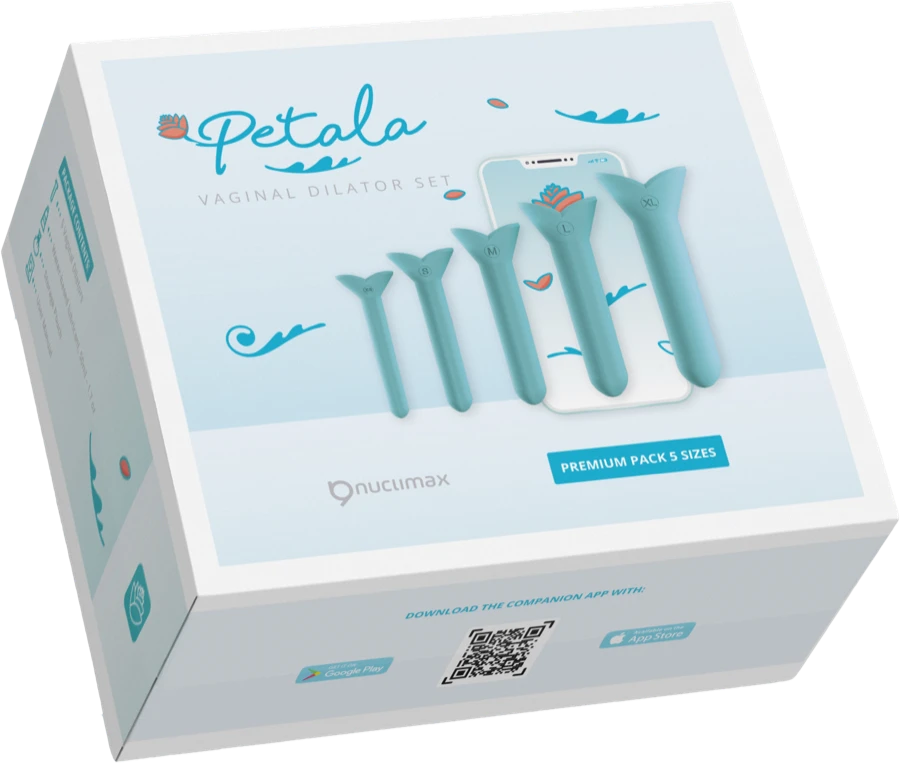
The Petala 5-Pack includes five graduated medical-grade silicone dilators, beginning at a size specifically designed for women who need to start very small — making it well suited for vestibulodynia rehabilitation.
Oral Medications
Evidence for oral and compounded pharmacologic treatments is mixed and generally lower-certainty than the evidence for multimodal physiotherapy [4].
Tricyclic antidepressants (e.g., amitriptyline, nortriptyline)
At low doses, these medications modify pain signalling in the nervous system. They are not prescribed for depression in this context — the pain-modulating effects occur at much lower doses.
Anticonvulsants (e.g., gabapentin, pregabalin)
These medications reduce nerve excitability and are sometimes used when clinicians suspect a neuropathic pain component.
SNRIs (e.g., duloxetine)
Serotonin-norepinephrine reuptake inhibitors may also be considered in selected chronic pain cases.
All oral medications carry potential side effects and should be discussed thoroughly with your prescribing clinician.
Nerve Blocks
For women with significant neuropathic pain that does not respond adequately to other treatments, pudendal nerve blocks or other pain procedures may be considered in selected cases. They are typically administered by a pain specialist or gynaecologist with specific training.
Cognitive-Behavioural Therapy (CBT)
CBT can be helpful for vestibulodynia and addresses psychological factors that maintain and amplify pain [6]:
- Pain catastrophising — the tendency to ruminate on, magnify, or feel helpless about pain
- Fear-avoidance behaviour — avoiding intimacy and physical contact due to anticipated pain
- Negative self-beliefs — feelings of brokenness, inadequacy, or guilt
- Relationship strain — communication difficulties and loss of emotional intimacy
Randomized trials suggest CBT and couples-based CBT can improve pain-related distress, sexual outcomes, and pain for some women and couples [6][7].
Mindfulness-Based Approaches
Mindfulness-based cognitive therapy (MBCT) and related approaches also have emerging evidence in provoked vestibulodynia [8]. These approaches help women:
- Develop a non-judgemental relationship with pain sensations
- Reduce the emotional reactivity that amplifies pain
- Build present-moment awareness rather than anticipatory anxiety
Surgical Intervention (Vestibulectomy)
For women who do not respond to conservative treatments after a sustained trial, vestibulectomy — surgical removal of the painful vestibular tissue — may be considered. Observational studies suggest many women improve after surgery, but outcomes vary across studies and surgery is generally reserved as a later-line option [4].
How Do You Build an Effective Care Team?
Managing vestibulodynia effectively often requires multiple specialists working together:
- Gynaecologist or vulvar pain specialist — for diagnosis, medical management, and coordination of care
- Pelvic floor physiotherapist — for muscle assessment, manual therapy, and rehabilitation
- Psychologist or sex therapist — for CBT, couples therapy, or mindfulness-based approaches
- Pain specialist — for nerve blocks, medication management, or complex pain cases
- GP — for referrals, ongoing monitoring, and holistic health management
Finding the right team may take time and persistence. If you feel your pain is being dismissed, seek a second opinion — vestibulodynia is a recognised medical condition with effective treatments, and you deserve to be taken seriously. For guidance on recognising when specialist help is needed, see our article on when to see a doctor.
What Is the Prognosis for Vestibulodynia?
The outlook for vestibulodynia is often encouraging:
- Many women improve with multimodal treatment, especially when pelvic floor, pain, and psychosexual factors are addressed together
- Some women achieve near-complete relief, while others manage residual or recurrent symptoms over time
- Recurrence can occur, particularly during stress, hormonal change, or after stopping rehabilitation routines
Recovery is rarely linear. There will be better weeks and harder weeks. But the overall trajectory, with the right support, is toward improvement — and for many women, toward pain-free intimacy.
Frequently Asked Questions
How is vestibulodynia diagnosed? Diagnosis is typically made through a cotton swab test (Q-tip test), where a clinician gently touches specific points around the vestibule with a cotton swab to map the pain. The diagnosis is made when this provokes significant pain in the vestibular area and other causes (infection, skin conditions, neurological disorders) have been ruled out.
Can vestibulodynia go away on its own? Some cases do improve when a clear trigger is identified and addressed, but many women benefit from active treatment rather than waiting.
Is vestibulodynia caused by psychological factors? No. Vestibulodynia is a recognised medical condition with identifiable physical components, including nerve proliferation and tissue changes. Psychological factors — such as anxiety, depression, or past trauma — can influence pain perception and should be addressed as part of treatment, but they are not the cause. Any clinician who dismisses your pain as “all in your head” is not providing evidence-based care.
Can I have sex with vestibulodynia? Many women with vestibulodynia continue to have fulfilling intimate lives, though this often requires adaptation. Using topical anaesthetics before intercourse, ensuring thorough arousal and lubrication, experimenting with positions that reduce pressure on the vestibule, and expanding the definition of intimacy beyond penetration can all help. Open communication with your partner is essential — our guide on partner communication and intimacy offers practical strategies.
How long does vestibulodynia treatment take? Treatment timelines vary significantly depending on symptom severity, the specific interventions used, and individual response. Some women notice change within weeks to months, while fuller recovery can take longer. Pelvic floor physiotherapy and dilator therapy usually require consistent practice over time. For a general sense of dilator therapy timelines, see our dilator therapy timeline.
Conclusion
Vestibulodynia can feel overwhelming — but it is a well-recognised condition with several evidence-supported treatment options. Whether your path involves topical therapies, pelvic floor physiotherapy, dilator therapy, psychological support, medication, or a combination, the critical first step is getting the right diagnosis and building a care team that listens.
You are not imagining your pain. You are not alone. And with the right approach, meaningful improvement is achievable.
When you are ready to incorporate dilator therapy into your treatment plan, the Petala 5-Pack provides five graduated medical-grade silicone dilators and a companion app with guided sessions and progress tracking — supporting gentle, self-paced rehabilitation alongside professional care.
References
[1] Bornstein, J., Goldstein, A. T., Stockdale, C. K., Bergeron, S., Pukall, C., Zolnoun, D., & Coady, D. (2016). 2015 ISSVD, ISSWSH, and IPPS consensus terminology and classification of persistent vulvar pain and vulvodynia. The Journal of Sexual Medicine, 13(4), 607–612.
[2] Harlow, B. L., Kunitz, C. G., Nguyen, R. H., Rydell, S. A., Turner, R. M., & MacLehose, R. F. (2014). Prevalence of symptoms consistent with a diagnosis of vulvodynia: Population-based estimates from two geographic regions. American Journal of Obstetrics and Gynecology, 210(1), 40.e1-40.e8.
[3] Goetsch, M. F., Morgan, T. K., Korcheva, V. B., Li, H., Peters, D., & Leclair, C. M. (2010). Histologic and receptor analysis of primary and secondary vestibulodynia and controls: A prospective study. American Journal of Obstetrics and Gynecology, 202(6), 614.e1-614.e8.
[4] Bohm-Starke, N., Wilbe Ramsay, K., Lytsy, P., Nordgren, B., Sjöberg, I., Moberg, K., & Flink, I. (2022). Treatment of provoked vulvodynia: A systematic review. The Journal of Sexual Medicine, 19(5), 789–808.
[5] Morin, M., Dumoulin, C., Bergeron, S., Mayrand, M.-H., Khalifé, S., Waddell, G., & Dubois, M.-F. (2021). Multimodal physical therapy versus topical lidocaine for provoked vestibulodynia: A multicenter, randomized trial. American Journal of Obstetrics and Gynecology, 224(2), 189.e1-189.e12.
[6] Goldfinger, C., Pukall, C. F., Thibault-Gagnon, S., McLean, L., & Chamberlain, S. (2016). Effectiveness of cognitive-behavioral therapy and physical therapy for provoked vestibulodynia: A randomized pilot study. The Journal of Sexual Medicine, 13(1), 88–94.
[7] Bergeron, S., Vaillancourt-Morel, M.-P., Corsini-Munt, S., Steben, M., Delisle, I., Mayrand, M.-H., & Rosen, N. O. (2021). Cognitive-behavioral couple therapy versus lidocaine for provoked vestibulodynia: A randomized clinical trial. Journal of Consulting and Clinical Psychology, 89(4), 316–326.
[8] Brotto, L. A., Bergeron, S., Zdaniuk, B., & Basson, R. (2020). Mindfulness and cognitive behavior therapy for provoked vestibulodynia: Mediators of treatment outcome and long-term effects. Journal of Consulting and Clinical Psychology, 88(1), 48–64.
Ready to start your journey to pain-free intimacy?
Shop Petala 5-Pack