
Last updated:
Silicone Dilators 101: How They Work and Why They're Beneficial
Learn how silicone vaginal dilators work, why medical-grade silicone is the best material, and who benefits most from dilator therapy — backed by peer-reviewed evidence.

Vaginal dilators are one of the most well-established, evidence-based tools in pelvic health — yet many women have never heard of them until a healthcare provider makes a recommendation. Whether you are exploring dilator therapy for the first time or looking for a deeper understanding of how silicone dilators work and why they are so widely recommended, this guide covers everything you need to know.
Medical disclaimer: This article is for educational purposes only. Always consult a qualified healthcare professional before beginning any treatment.
What Are Silicone Vaginal Dilators?
A vaginal dilator is a smooth, tube-shaped device designed to gently stretch the vaginal canal and encourage the surrounding pelvic floor muscles to relax. Dilators come in graduated sizes — typically a set of four to six — so that users can begin with the smallest comfortable size and progress at their own pace.
Medical-grade silicone dilators are the modern standard. Unlike older designs made from rigid plastic or glass, silicone dilators are body-safe, flexible, and designed to feel as comfortable as possible during therapy. Clinical reviews describe vaginal dilators as one part of multimodal care for vaginismus and other penetration difficulties [2].
The principle behind dilator therapy is straightforward: through gentle, repeated insertion, the vaginal tissues gradually adapt, the pelvic floor muscles learn to relax rather than contract, and the nervous system is desensitised to the sensation of penetration. Over time, this process reduces pain and restores comfort.
Why Is Medical-Grade Silicone the Best Material for Dilators?
Not all dilator materials are equal, and the choice of material has a direct impact on safety, comfort, and therapeutic effectiveness.
Biocompatibility and safety. Medical-grade silicone is classified as biocompatible, meaning it is well-tolerated by human tissue and does not provoke allergic reactions or irritation. It has been used safely in medical implants and devices for decades (Curtis & Colas, 2004). For a device that comes into direct contact with sensitive mucosal tissue, this is essential.
Non-porous and hygienic. Silicone is non-porous — it does not absorb bacteria, fungi, or odours. This makes it significantly easier to clean and sterilise than porous alternatives like certain rubbers or thermoplastics. A simple wash with warm water and mild soap is sufficient. For detailed guidance, see our article on how to clean vaginal dilators.
Body-temperature responsiveness. Silicone naturally warms to body temperature within moments of contact, which makes insertion feel more natural and less jarring than cold, rigid materials like hard plastic or metal.
Flexibility with structure. The best dilators strike a balance: firm enough to maintain their shape during use, yet flexible enough to move with the body and avoid causing discomfort. Medical-grade silicone achieves this balance better than any other material currently available.
How Do Vaginal Dilators Work?
Dilator therapy works through three interconnected mechanisms:
Tissue adaptation and elasticity
The vaginal walls are composed of mucosal tissue that responds to gentle, sustained stretching. Regular dilator use encourages the tissue to gradually increase in elasticity and capacity. This is particularly important after menopause, radiation therapy, or surgical procedures, where tissue may have become thinner, less elastic, or scarred.
Pelvic floor muscle relaxation
Many conditions involving vaginal pain — particularly vaginismus — are characterised by involuntary contraction of the pelvic floor muscles. Dilators provide a safe, controlled way to retrain these muscles. By practising insertion at a comfortable size, the muscles learn to relax rather than tighten reflexively. This can be supported by pelvic floor exercises designed to improve both strength and the ability to release.
Nervous system desensitisation
Pain is not purely physical — it involves the nervous system’s interpretation of sensation. When someone has experienced repeated pain during penetration, the brain begins to anticipate pain and trigger a protective response (muscle tightening, anxiety, avoidance) even before pain occurs. Dilator therapy gradually recalibrates this response. By associating penetration with neutral or comfortable sensations, the nervous system learns that penetration does not have to mean pain (Pacik & Geletta, 2017).
Who Benefits from Vaginal Dilator Therapy?
Dilator therapy is recommended across a wide range of conditions and life stages.
Vaginismus and vulvodynia
Vaginismus — involuntary tightening of the vaginal muscles — is one of the most common reasons women begin dilator therapy. Dilators are considered a first-line treatment, often used alongside pelvic floor physiotherapy and psychological support. For related conditions like vestibulodynia, dilators can also play a role in a broader treatment programme. Learn more in our article on vestibulodynia treatment options.
Post-surgical recovery
After gynaecological surgery — including hysterectomy, vulvectomy, or vaginal reconstruction — dilator therapy helps maintain vaginal length and width, prevent adhesion formation, and restore comfortable function. Healthcare providers often prescribe dilators as part of the post-operative rehabilitation plan.
Menopause and hormonal changes
Declining oestrogen levels during menopause lead to vaginal atrophy: the tissue becomes thinner, drier, and less elastic. Dilator therapy, often combined with topical oestrogen or moisturisers, helps maintain tissue health and comfort. Our guide to navigating menopause and intimacy explores this topic in greater depth.
Radiation therapy for pelvic cancers
Pelvic radiation — used to treat cervical, uterine, vaginal, and rectal cancers — can cause vaginal stenosis (narrowing and shortening). Radiation-oncology reviews and major cancer centres commonly discuss dilator therapy as part of care after pelvic radiation, although the ideal protocol varies [3][4].
Postpartum recovery
After childbirth — particularly when there has been tearing, an episiotomy, or significant pelvic floor tension — dilators can help women gradually rebuild comfort with penetration. Read more in our article on postpartum recovery with dilators.
How Should You Use a Vaginal Dilator?
Getting started with dilator therapy does not require special training, but following a structured approach makes a meaningful difference to outcomes. Here is a step-by-step guide:
-
Choose a private, comfortable space. Find somewhere you feel safe and relaxed, with no time pressure. Many women prefer to practise lying down, but you can also sit reclined or stand with one foot elevated — whatever feels most natural.
-
Begin with breathing and relaxation. Spend two to five minutes on slow, deep diaphragmatic breathing. This activates the parasympathetic nervous system and helps the pelvic floor muscles release. Some women find guided meditation or progressive muscle relaxation helpful at this stage.
-
Apply lubricant generously. Always use a water-based lubricant with silicone dilators. Apply it to both the dilator and the vaginal opening. Adequate lubrication is essential for comfort and effectiveness. Our lubricant guide for dilators covers how to choose the right product.
-
Start with the smallest comfortable size. Insert the dilator slowly and gently, pausing whenever you feel resistance. There is no benefit to forcing a larger size than your body is ready for. If the smallest dilator in your set feels too large, simply rest the tip at the vaginal entrance without full insertion.
-
Hold the dilator in place for 10 to 20 minutes. Once inserted, relax around the dilator. You can read, listen to music, or practise breathing exercises during this time. The goal is to teach your muscles to stay relaxed with the dilator in place.
-
Progress gradually. When a given size feels comfortable with minimal resistance over several sessions, you are ready to move to the next size. For guidance on pacing, see our dilator therapy timeline. There is no fixed schedule — your body sets the pace.
-
Practise consistently. Most clinicians recommend sessions three to five times per week. Regularity matters more than duration. Even short, consistent sessions produce better results than infrequent long ones.
What Should You Expect During Dilator Therapy?
It is entirely normal to experience a range of physical and emotional responses during dilator therapy.
Physically, you may feel pressure, mild stretching, or slight discomfort during the first few sessions. This should not be sharp pain. If you experience significant pain, stop and consult your healthcare provider — you may need a smaller size, more lubricant, or additional pelvic floor work before continuing.
Emotionally, the process can bring up feelings of frustration, vulnerability, or even grief — particularly if you have been living with pain for a long time. These responses are valid and common. Many women find that working with a pelvic floor physiotherapist or psychologist alongside dilator therapy provides invaluable support.
In terms of timeline, published timelines vary widely. Some women notice change within weeks, while others need several months. In one 241-patient multimodal vaginismus programme that included Botox, sedation-assisted dilation, and follow-up, women who achieved pain-free intercourse did so at a mean of 5.1 weeks — but that intensive protocol should not be treated as the default timeline for home dilator therapy [4]. Progress is rarely linear — some weeks feel easier than others, and that is completely normal.
How Do You Choose the Right Dilator Set?
When selecting a dilator kit, consider the following:
- Size range: A good set covers the full therapeutic range, from a very small starter size to a size comparable to average penetration. Five or more sizes offer the most gradual progression. For detailed guidance, see our dilator size guide.
- Material: Medical-grade silicone is the clear recommendation for the reasons outlined above.
- Finish and design: Look for a smooth, seamless surface with no rough edges or seams that could cause irritation.
- Completeness: Kits that include all necessary sizes, a lubricant sample, and storage save you from piecing together components separately. For a detailed comparison, see our article on Petala vs Intimate Rose dilators.
Taking the Next Step
Vaginal dilator therapy is a proven, clinician-recommended approach to reclaiming comfort, confidence, and control over your intimate health. Whether you are managing vaginismus, recovering from surgery, navigating menopause, or rehabilitating after radiation treatment, silicone dilators offer a gentle, effective path forward.
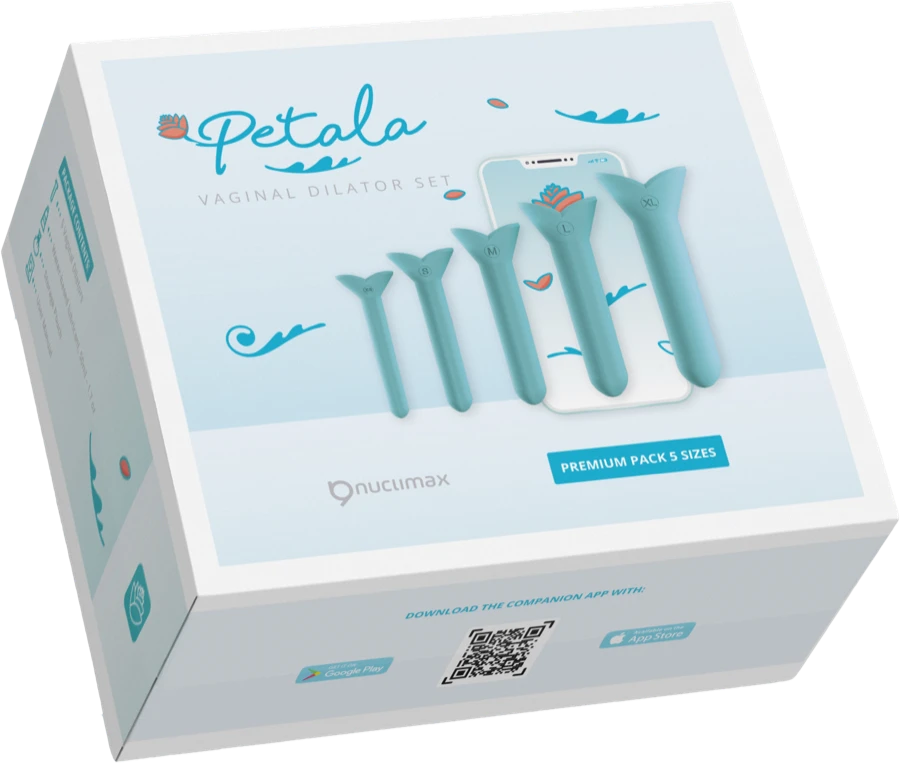
The journey requires patience and consistency, but meaningful improvement is achievable with the right tools and support. If you are ready to begin, the Petala 5-Pack provides five graduated medical-grade silicone dilators and a companion app to guide your progress from your very first session.
You deserve comfort. You deserve support. And you deserve to move forward at your own pace.
Frequently Asked Questions
Are silicone vaginal dilators safe to use? Yes. Medical-grade silicone is biocompatible, hypoallergenic, and non-porous, making it one of the safest materials for devices that contact mucosal tissue. It has been used in medical applications for decades. However, you should always consult your healthcare provider before beginning dilator therapy to ensure it is appropriate for your specific situation.
How long does dilator therapy take to work? Timelines vary significantly depending on the underlying condition, its severity, and the type of treatment plan you are following. Some women notice improvement within weeks; others need several months. Progress is gradual, and there is no “correct” speed — your body sets the pace.
Can I use silicone dilators with any lubricant? Water-based lubricant is the safest default choice for silicone dilators. Silicone- and oil-based products can be harder to clean off the device, and some silicone products may affect the surface of silicone dilators over time.
Do I need a prescription to use vaginal dilators? In most countries, vaginal dilators are available without a prescription. However, it is strongly recommended that you consult a healthcare professional — such as a gynaecologist or pelvic floor physiotherapist — before beginning therapy. They can help you understand the underlying cause of your symptoms, confirm that dilator therapy is appropriate, and guide your approach.
Is dilator therapy painful? Dilator therapy should not be painful. You may feel pressure or mild stretching, particularly when using a new size, but sharp or significant pain is a signal to stop. If you experience pain, try a smaller size, use more lubricant, or speak with your healthcare provider. The goal is gradual desensitisation and relaxation, not endurance.
References
[1] Curtis, J. & Colas, A. (2004). Medical applications of silicones. In B. D. Ratner, A. S. Hoffman, F. J. Schoen, & J. E. Lemons (Eds.), Biomaterials Science: An Introduction to Materials in Medicine (2nd ed., pp. 697–707). Elsevier Academic Press.
[2] Chalmers, K. J. (2024). Clinical assessment and management of vaginismus. Australian Journal of General Practice, 53(1-2), 37–41.
[3] Damast, S., Jeffery, D. D., Son, C. H., Hasan, Y., Carter, J., Lindau, S. T., & Jhingran, A. (2019). Literature review of vaginal stenosis and dilator use in radiation oncology. Practical Radiation Oncology, 9(6), 479–491.
[4] Pacik, P. T., & Geletta, S. (2017). Vaginismus treatment: Clinical trials follow up 241 patients. Sexual Medicine, 5(2), e114–e123.
Ready to start your journey to pain-free intimacy?
Shop Petala 5-Pack