
Last updated:
Postpartum Recovery and Vaginal Dilators: A Gentle Guide to Healing
Learn how vaginal dilators can support postpartum recovery — from managing scar tissue and hormonal changes to rebuilding comfort and confidence with intimacy after childbirth.

Medical disclaimer: This article is for informational purposes only and does not constitute medical advice. Always consult your GP, obstetrician, midwife, or pelvic floor physiotherapist before beginning dilator therapy or any new rehabilitation programme after childbirth.
Childbirth changes the body in profound ways — and not all of those changes resolve on their own. Many women experience ongoing pain, tightness, or discomfort with intimacy in the weeks, months, or even years following delivery. Yet postpartum intimate pain remains one of the most under-discussed aspects of recovery.
Vaginal dilators can offer a gentle rehabilitation tool for addressing this pain — helping to soften scar tissue, reduce muscle tension, and gradually rebuild comfort. This guide explains why postpartum pain happens, when and how to start dilator therapy, and what to expect along the way.
Why Does Postpartum Pain Happen?
Postpartum intimate discomfort — medically termed postpartum dyspareunia — is remarkably common. A 2021 systematic review and meta-analysis estimated prevalence around 42% at 2 months postpartum, 43% at 2-6 months, and 22% at 6-12 months [1].
The causes are multifactorial:
Scar Tissue and Perineal Trauma
Vaginal tearing (occurring in an estimated 85% of vaginal births) and episiotomies create scar tissue as they heal [2]. Scar tissue behaves differently from the surrounding tissue:
- It is less elastic — making it resistant to stretching
- It can be hypersensitive — producing sharp or burning pain when touched
- It may develop adhesions — bands of scar tissue that bind to adjacent structures, restricting mobility
Even apparently minor tears (first or second degree) can produce scar tissue significant enough to cause discomfort during penetration.
Pelvic Floor Muscle Tension
The pelvic floor undergoes enormous strain during pregnancy and delivery. In the postpartum period, these muscles may be:
- Hypertonic (too tight) — a protective guarding response, particularly common after traumatic deliveries
- Weak and uncoordinated — unable to contract and relax through their normal range
- A combination of both — tight in some areas while weak in others
This dysfunction can make penetration feel painful, impossible, or simply “different” from before.
Hormonal Changes
After delivery — and especially during breastfeeding — oestrogen levels drop significantly. This hormonal shift causes:
- Vaginal dryness — reduced natural lubrication
- Tissue thinning — the vaginal walls become thinner and more fragile
- Decreased elasticity — tissue is less able to accommodate stretching
These changes can persist for the entire duration of breastfeeding and sometimes beyond. For women navigating similar hormonal changes later in life, our guide on navigating menopause and intimacy covers comparable strategies.
Psychological and Emotional Factors
The emotional landscape of new motherhood — sleep deprivation, identity shifts, body image changes, the demands of caring for a newborn — can profoundly affect desire and comfort with intimacy. Fear of pain, anxiety about the changed body, or unprocessed feelings about a difficult birth may manifest as physical tension and guarding.
When Is It Safe to Start Dilator Therapy After Birth?
The traditional “six-week clearance” from your GP or midwife is a starting point, not a finish line. This check-up confirms that major healing has occurred, but it does not mean you should be ready for pain-free intimacy.
General Timeline Guidance
- 0–6 weeks: Focus on rest, wound healing, and general recovery. No penetrative rehabilitation.
- 6–8 weeks (after medical clearance): You may begin very gentle external exploration — touching the perineum, applying light pressure near (not inside) the vaginal opening, and starting pelvic floor breathing exercises.
- 8–12 weeks: Many women can begin internal dilator therapy at this stage, starting with the smallest size and progressing very slowly.
- 3–6 months and beyond: Gradual progression through dilator sizes as comfort allows. Some women need several months; others are faster. There is no “right” timeline.
Important Caveats
- If you had a caesarean section, your recovery timeline may be different. While vaginal tissue was not directly traumatised, abdominal scar tissue, pelvic floor changes from pregnancy, and hormonal shifts still apply.
- If you had a third- or fourth-degree tear, consult your obstetrician or a pelvic floor physiotherapist before beginning any internal work. These more extensive injuries require longer healing times.
- If you experience any unusual symptoms — increased bleeding, signs of infection, or severe pain — stop and seek medical advice promptly.
How Do You Use Vaginal Dilators for Postpartum Recovery?
Dilator therapy for postpartum recovery follows the same graduated, gentle principles used for other pelvic pain conditions — with some specific adaptations.
Step-by-Step Guide
Step 1: Prepare Your Environment
Choose a time when you are unlikely to be interrupted. A warm bath beforehand can help relax the muscles. Gather your dilator, a generous amount of water-based lubricant, pillows for support, and anything that helps you feel calm (music, a podcast, low lighting).
Step 2: Begin with Breathing
Spend 3–5 minutes practising diaphragmatic breathing. Inhale deeply through your nose, allowing your belly to rise and your pelvic floor to soften. Exhale slowly through your mouth. This activates the parasympathetic nervous system and signals your muscles to release.
Step 3: External Exploration First
Before inserting a dilator, spend a few minutes gently touching the perineal area. If you have scar tissue, apply gentle pressure to the scar with a lubricated finger, using small circular motions. This kind of gentle desensitisation work is commonly used in pelvic floor rehabilitation.
Step 4: Insert the Smallest Dilator
Apply lubricant generously to both the dilator and the vaginal opening. On an exhale, gently guide the dilator in — only as far as is comfortable. There should be a sensation of pressure or stretching, but not sharp pain. If you encounter resistance, pause, breathe, and let the muscles release before continuing.
Step 5: Hold and Breathe
Once the dilator is comfortably in place, hold it still for 10–15 minutes. Continue your breathing practice. Some women find it helpful to gently rotate the dilator or apply light pressure toward the perineum (particularly toward any scar tissue) — but only if this is comfortable.
Step 6: Progress Gradually
When a dilator size feels comfortable with minimal or no discomfort for 2–3 consecutive sessions, you may consider advancing to the next size. There is no rush. For detailed guidance on choosing the right progression, see our dilator size guide.
How Often Should You Practise?
Aim for 2–4 sessions per week, each lasting 10–20 minutes. Consistency is more important than duration. Many women prefer alternate days to allow tissue recovery between sessions.
How Does Breastfeeding Affect Postpartum Dilator Therapy?
Breastfeeding maintains low oestrogen levels, which directly affects vaginal tissue. Women who are breastfeeding often experience:
- More pronounced vaginal dryness
- Greater tissue sensitivity
- Slower tissue response to stretching
This does not mean dilator therapy cannot be effective during breastfeeding — it absolutely can — but it requires additional patience and generous use of lubricant.
Some practical considerations:
- Use a high-quality water-based lubricant and reapply frequently during sessions
- Expect slower progression between sizes — this is normal and not a sign of failure
- Discuss vaginal moisturisers or local oestrogen with your doctor — evidence is limited, but these options are sometimes considered for postpartum vulvovaginal symptoms on an individual basis [4][5]
- Timing of sessions — some women find that vaginal dryness is more pronounced immediately after nursing; scheduling dilator sessions at other times may be more comfortable
What About the Emotional Side of Postpartum Recovery?
Physical rehabilitation is only part of the picture. The emotional aspects of returning to intimacy after childbirth deserve equal attention.
Common Emotional Experiences
- Fear of pain — particularly if delivery was traumatic or previous attempts at intimacy were painful
- Body image changes — adjusting to a body that looks and feels different
- Guilt or pressure — feeling obligated to “get back to normal” for a partner
- Grief or loss — mourning the body or intimate life you had before
- Disconnection — feeling “touched out” after a day of caring for a baby
All of these experiences are valid and common. They are not obstacles to recovery — they are part of it.
Supporting Emotional Recovery
- Communicate openly with your partner. Honest conversation about fears, needs, and boundaries is essential. For practical strategies, see our guide on partner communication and intimacy.
- Consider postnatal counselling or therapy. A therapist experienced in perinatal mental health can help process difficult birth experiences and address anxiety around intimacy.
- Separate rehabilitation from sexual activity. Dilator therapy is a medical rehabilitation tool — it does not need to be sexual. Approaching it as a self-care practice can reduce performance pressure.
- Set your own timeline. There is no “normal” time to resume intimacy after birth. Your readiness is determined by your body and your feelings — not by a calendar or anyone else’s expectations.
What Role Does Pelvic Floor Physiotherapy Play?
A pelvic floor physiotherapist is one of the most valuable members of your postpartum recovery team. They can:
- Assess your pelvic floor — identifying whether muscles are hypertonic, weak, or a combination
- Evaluate scar tissue — determining whether adhesions are contributing to pain
- Teach targeted exercises — including reverse Kegels, scar massage techniques, and progressive relaxation
- Guide your dilator therapy — recommending starting sizes, progression timelines, and techniques specific to your needs
- Monitor progress — adjusting your programme as you improve
In many countries, postnatal pelvic floor assessment is standard care. If it is not offered to you, ask for a referral — it is one of the most impactful things you can do for your long-term recovery.
Frequently Asked Questions
Is it normal to still have pain months after giving birth? Yes. While many women see improvement within the first few months, it is not uncommon for postpartum intimate pain to persist for six months, a year, or longer — particularly if scar tissue, pelvic floor dysfunction, or hormonal factors are involved. Persistent pain is treatable and should not be dismissed as something you simply have to live with.
Can I use vaginal dilators after a caesarean section? Yes. Even without vaginal delivery, pregnancy itself causes pelvic floor changes, and hormonal shifts affect vaginal tissue. Some women also develop anxiety around penetration after a caesarean — particularly if it was an emergency procedure. Dilator therapy can help address all of these factors. Discuss timing with your healthcare provider.
Will dilator therapy affect my ability to breastfeed? No. Vaginal dilator therapy has no impact on milk supply or breastfeeding. The only consideration is that breastfeeding-related hormonal changes may cause increased vaginal dryness, making additional lubricant necessary during sessions.
How long will postpartum dilator therapy take? This varies enormously depending on the severity of scar tissue, muscle tension, hormonal status, and how frequently you are able to practise. Some women progress quickly; others take several months. For a broader look at what to expect, see our dilator therapy timeline.
Should my partner be involved in my dilator therapy? This is a personal choice. Many women prefer to begin dilator therapy on their own, as it allows them to focus on their own sensations without the pressure of a partner’s presence. Others find that involving a partner at later stages can be a way to rebuild shared intimacy. There is no right answer — only what feels right for you.
Conclusion
Postpartum intimate pain is common, but it is not something you should have to simply endure. With patience, the right support, and evidence-based tools, recovery is not only possible — it is likely.
Vaginal dilators offer a gentle, self-directed way to address scar tissue, reduce pelvic floor tension, and gradually rebuild comfort and confidence. Combined with pelvic floor physiotherapy, open communication, and self-compassion, they can be a powerful part of your postpartum healing journey.
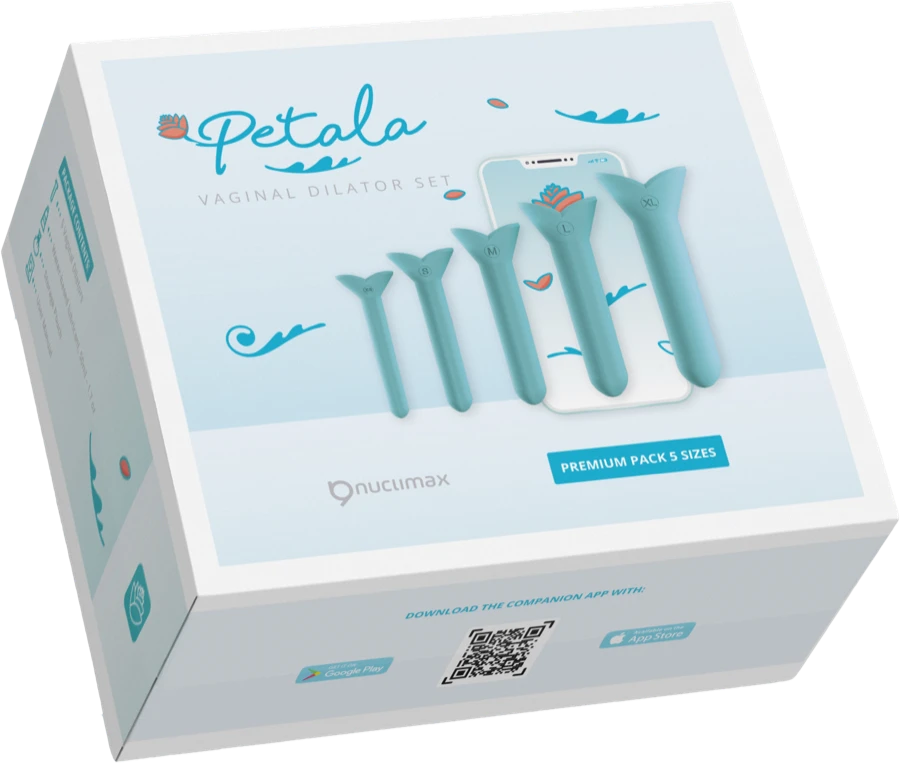
When you are ready, the Petala 5-Pack provides five graduated medical-grade silicone dilators and a companion app with guided sessions, progress tracking, and reminders — designed to support you through every stage of recovery, at your own pace.
References
[1] Banaei, M., Kariman, N., Ozgoli, G., Nasiri, M., Ghasemi, V., Khiabani, A., Dashti, S., & Mohamadkhani Shahri, L. (2021). Prevalence of postpartum dyspareunia: A systematic review and meta-analysis. International Journal of Gynecology & Obstetrics, 153(1), 14–24.
[2] Smith, L. A., Price, N., Simonite, V., & Burns, E. E. (2013). Incidence of and risk factors for perineal trauma: A prospective observational study. BMC Pregnancy and Childbirth, 13, 59.
[3] Rosenbaum, T. Y. (2007). Pelvic floor involvement in male and female sexual dysfunction and the role of pelvic floor rehabilitation in treatment: A literature review. The Journal of Sexual Medicine, 4(1), 4–13.
[4] Smith, P. E., McLaughlin, E. M., Pandya, L. K., Hade, E. M., Lynch, C. D., & Hudson, C. O. (2022). A pilot randomized controlled trial of vaginal estrogen on postpartum atrophy, perineal pain, and sexual function. International Urogynecology Journal, 33(12), 3383–3390.
[5] Calleja-Agius, J., Brincat, M. P., & Paul, C. (2024). Genitourinary syndrome of lactation: A new perspective on postpartum and lactation-related genitourinary symptoms. Sexual Medicine Reviews, 12(4), qiae034.
Ready to start your journey to pain-free intimacy?
Shop Petala 5-Pack