
Last updated:
Best Lubricant for Dilators: A Complete Guide to Types, Safety, and Application
Discover the best lubricant for vaginal dilators. Compare water-based, silicone-based, and oil-based options, learn why water-based is essential for silicone dilators, and avoid harmful ingredients.

Lubricant is not optional during dilator therapy — it’s essential. The right lubricant reduces friction, makes insertion more comfortable, and helps your pelvic floor muscles relax rather than guard. The wrong one can degrade your dilators, irritate sensitive tissue, or introduce ingredients that disrupt vaginal health. This guide covers everything you need to know to choose wisely.
Medical disclaimer: This article is for educational purposes only and does not constitute medical advice. If you experience irritation or allergic reactions to any lubricant, discontinue use immediately and consult a qualified healthcare professional.
Why Is Lubricant So Important for Dilator Therapy?
During dilator therapy, the goal is to gently stretch vaginal tissue and retrain pelvic floor muscles to relax. Friction works against both of these objectives. Without adequate lubrication:
- The vaginal tissue experiences unnecessary drag, which the body interprets as a potential threat
- Pelvic floor muscles reflexively tighten in response to friction-related discomfort
- Micro-tears in the vaginal mucosa become more likely, particularly in women experiencing dryness due to menopause, hormonal changes, or medication side effects
A prospective diary study and a later systematic review found that lubricant use was associated with greater comfort, pleasure, or satisfaction and was generally acceptable to users [1][2]. The same comfort principle applies directly to dilator therapy sessions.
For women navigating hormonal changes that affect vaginal moisture, our guide to navigating menopause and intimacy covers additional strategies for managing dryness.
What Are the Main Types of Lubricant?
Lubricants fall into three broad categories, each with distinct properties, advantages, and limitations.
Water-Based Lubricants
Water-based lubricants are the most widely recommended option for dilator therapy — and the safest default choice for silicone dilators.
Advantages:
- Compatible with all dilator materials — silicone, plastic, glass, and metal
- Easy to clean — rinses away with water, leaving no residue
- Gentle on vaginal tissue — less likely to cause irritation or disrupt pH balance
- Widely available in pharmacies and online
Limitations:
- Evaporate and absorb more quickly than silicone- or oil-based options — you may need to reapply during longer sessions
- Some formulations contain problematic ingredients (see the ingredient watch-out section below)
Silicone-Based Lubricants
Silicone-based lubricants are longer-lasting and exceptionally slippery. However, they are usually not the first choice for silicone dilators.
Many practical dilator guides advise avoiding oil- and silicone-based lubricants because they do not wash off the dilator easily [3].
When silicone-based is appropriate:
- With dilators made from glass, metal, or hard plastic (not silicone)
- During intercourse with condoms (silicone lubricant is condom-safe)
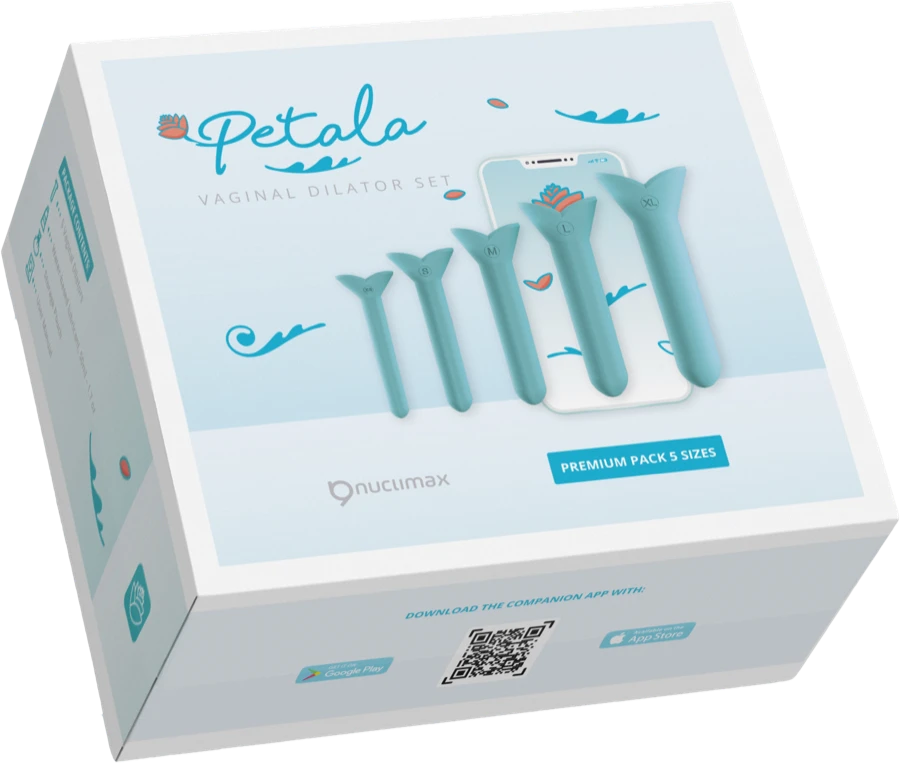
Bottom line: If you own silicone dilators — including the Petala 5-Pack — water-based lubricant is the safest standard choice.
Oil-Based Lubricants
Oil-based options include both natural oils (coconut oil, olive oil) and commercial oil-based lubricants.
Advantages:
- Long-lasting — don’t evaporate or absorb as quickly as water-based
- Natural oils can feel soothing and are free from synthetic chemicals
Limitations:
- Not ideal for routine dilator therapy — many practical dilator guides prefer water-based options [3]
- Difficult to clean from dilators and vaginal tissue
- Incompatible with latex condoms — relevant if you use barrier protection
Bottom line: Oil-based lubricants are best avoided for dilator therapy. Water-based remains the safest, most practical choice.
Which Ingredients Should You Watch Out For?
Not all water-based lubricants are created equal. Some contain ingredients that can irritate vaginal tissue, disrupt the vaginal microbiome, or cause allergic reactions. Here’s what to look for — and what to avoid — on the label.
Ingredients to Avoid
- Glycerin (glycerol) — if you’re prone to irritation or recurrent yeast infections, many people prefer glycerin-free formulas
- Nonoxynol-9 — a spermicide that damages vaginal epithelial cells and increases infection risk
- Fragrances or flavourings — unnecessary additives that frequently cause irritation
- Highly hyperosmolar formulas — the World Health Organization advises avoiding very hyperosmolar lubricants because they can damage epithelial tissue [4]
What to Look For
- Simple water-based formulas with short ingredient lists — fewer additives usually means fewer potential irritants
- Fragrance-free or hypoallergenic formulations — particularly if you have a history of sensitivity
- “pH-balanced” or “iso-osmolar” — if the manufacturer provides that information
- Aloe vera or hyaluronic acid — if you want extra hydration
How Should You Apply Lubricant During Dilator Therapy?
Application technique matters almost as much as product choice. Here’s how to get the most from your lubricant.
Before Insertion
- Apply a generous amount to the tip and shaft of the dilator — don’t be sparing; more is almost always better
- Apply a small amount to the vaginal opening — this reduces initial friction at the point of most sensitivity
- Warm the lubricant between your fingers if it feels cold — cold lubricant can trigger a reflexive tightening response
During Your Session
- Reapply if you feel increased friction or dryness — water-based lubricants absorb over time, especially during sessions longer than 10 minutes
- Keep the bottle within easy reach — interrupting your session to find lubricant can break your relaxation state
- Add a few drops of water to reactivate water-based lubricant that has begun to dry — this can extend its effectiveness without needing a full reapplication
After Your Session
- Clean the dilator promptly — lubricant residue left on silicone can attract dust and bacteria. For detailed cleaning instructions, see our dilator cleaning guide
- Wash the vulvar area gently with warm water to remove external lubricant residue
Can You Make Your Own Lubricant?
This question comes up frequently, and the short answer is: it’s best not to. Homemade lubricants (aloe vera gel from the plant, coconut oil, etc.) lack the quality control, pH balancing, and sterility testing that commercial products undergo. The vaginal environment is sensitive, and introducing uncontrolled substances increases infection risk.
If cost is a concern, many excellent water-based lubricants are available at affordable price points. Look for basic, unfragranced formulations — they tend to be less expensive than premium or “speciality” products while being equally effective. For guidance on what to expect as you progress through your dilator therapy journey, see our dilator therapy timeline.
Frequently Asked Questions
Can I use coconut oil with my silicone dilators? It is not recommended. Oils are harder to clean off the dilator and off vaginal tissue, and most practical dilator guides prefer water-based lubricant for routine use with silicone dilators [3].
How much lubricant should I use per session? There is no upper limit that causes harm — use as much as you need to feel comfortable. A good starting point is approximately a teaspoon-sized amount on the dilator plus a small amount on the vaginal opening. Reapply whenever friction increases. It is far better to use too much than too little.
What if lubricant causes a burning or stinging sensation? Discontinue that product immediately and rinse the area with warm water. Burning or stinging typically indicates sensitivity to one or more ingredients — most commonly glycerin, propylene glycol, or parabens. Switch to a hypoallergenic, pH-balanced formulation with a shorter ingredient list. If irritation persists with multiple products, consult your healthcare provider.
Do I need a prescription lubricant? Most women do well with over-the-counter water-based lubricants. However, if you have a specific condition such as Sjogren’s syndrome, lichen sclerosus, or severe vaginal atrophy, your doctor may recommend a prescription-grade vaginal moisturiser or oestrogen-based cream to use alongside (not as a replacement for) lubricant during dilator sessions.
Can I use the same lubricant for dilator therapy and intercourse? Yes — a good-quality, water-based, pH-balanced lubricant is suitable for both dilator therapy and sexual activity. Choosing one product for both purposes simplifies your routine and ensures you’re always using something safe for your body and your dilators.
Conclusion
The right lubricant makes a meaningful difference in your dilator therapy experience — turning sessions from uncomfortable to manageable, and from manageable to genuinely therapeutic. A simple water-based, fragrance-free formula is usually the safest place to start, and generous application matters just as much as the brand you choose. Your body will thank you.
Ready to start or continue your dilator therapy journey? The Petala 5-Pack includes medical-grade silicone dilators designed to work perfectly with water-based lubricants, plus a companion app to guide your sessions and track your progress.
References
[1] Herbenick, D., Reece, M., Hensel, D., Sanders, S., Jozkowski, K., & Fortenberry, J.D. (2011). “Association of lubricant use with women’s sexual pleasure, sexual satisfaction, and genital symptoms: a prospective daily diary study.” The Journal of Sexual Medicine, 8(1), 202–212.
[2] Kennedy, C.E., Yeh, P.T., Li, J., Gonsalves, L., & Narasimhan, M. (2021). “Lubricants for the promotion of sexual health and well-being: a systematic review.” Sexual and Reproductive Health Matters, 29(3), 2044198.
[3] Memorial Sloan Kettering Cancer Center. (2025). “How To Use a Vaginal Dilator.”
[4] World Health Organization. (2012). “Use and procurement of additional lubricants for male and female condoms: WHO/UNFPA/FHI360 Advisory note.” Geneva: WHO.
Ready to start your journey to pain-free intimacy?
Shop Petala 5-Pack