
Last updated:
Endometriosis and Dilator Therapy: Managing Pelvic Pain and Dyspareunia
Understand how endometriosis causes pelvic pain and painful sex, and learn how vaginal dilator therapy can help manage symptoms alongside complementary treatments and your healthcare team.

Medical disclaimer: This article is for informational purposes only and does not constitute medical advice. Endometriosis is a complex medical condition requiring professional diagnosis and management. Always consult your gynaecologist, pelvic pain specialist, or pelvic floor physiotherapist before beginning dilator therapy or making changes to your treatment plan.
Endometriosis affects an estimated one in ten women of reproductive age worldwide — roughly 190 million people [1]. Among its many symptoms, painful sex (dyspareunia) is one of the most distressing and least discussed. For many women, the pain associated with endometriosis extends far beyond menstruation, deeply affecting intimate relationships, mental health, and quality of life.
Vaginal dilator therapy is not a treatment for endometriosis itself, but it can play a meaningful role in managing the secondary pelvic floor dysfunction and pain that the condition creates. This guide explains the connection between endometriosis and intimate pain, how dilators can help, and how to integrate them into a broader care plan.
How Does Endometriosis Cause Pelvic Pain?
Endometriosis occurs when tissue similar to the uterine lining (endometrium) grows outside the uterus — on the ovaries, fallopian tubes, bowel, bladder, or pelvic lining. Like the uterine lining, this tissue responds to hormonal cycles: it thickens, breaks down, and bleeds with each menstrual cycle. But because the tissue is outside the uterus, it has no way to exit the body.
This process causes:
- Chronic inflammation — the body mounts an immune response to the misplaced tissue
- Adhesions and scarring — bands of fibrous tissue form, binding organs together
- Nerve sensitisation — chronic inflammation can alter how nerves process pain signals, leading to central sensitisation where the nervous system amplifies pain [2]
- Deep infiltrating endometriosis — lesions that penetrate more than 5mm into tissue can directly affect the nerves supplying the vagina, rectum, and pelvic floor
Why Does Endometriosis Cause Painful Sex?
Dyspareunia associated with endometriosis can be classified as:
Deep Dyspareunia
Pain felt deep in the pelvis during penetration. This is often caused by:
- Endometriotic lesions on the uterosacral ligaments or in the pouch of Douglas (the space between the uterus and rectum)
- Adhesions restricting the mobility of pelvic organs
- Direct contact or pressure on inflamed tissue during intercourse
Secondary Pelvic Floor Dysfunction
Chronic pain triggers a protective guarding response in the pelvic floor muscles. Over time, these muscles become chronically tight (hypertonic), creating a secondary source of pain that persists even when endometriosis lesions are treated [3].
This is a critical point: some women continue to experience intimate pain even after endometriosis treatment because pelvic floor dysfunction and sensitization can continue to contribute to pain. This is where dilator therapy becomes particularly relevant.
Psychological Pain Amplification
Living with chronic pain creates conditioned responses: the brain begins to associate penetration with pain, triggering anticipatory anxiety, muscle guarding, and heightened pain perception. Over time, this fear-tension-pain cycle becomes self-sustaining.
What Role Do Dilators Play in Endometriosis Pain Management?
Vaginal dilators do not treat endometriosis directly. They address the secondary consequences of living with the condition:
Reducing Pelvic Floor Hypertonicity
Graduated dilator therapy helps retrain the pelvic floor muscles to relax. By introducing gentle, progressive stretching in a controlled, low-pressure environment, dilators help break the cycle of chronic guarding and teach the muscles that penetration does not have to equal pain.
Desensitising Painful Tissue
For women with nerve sensitisation, dilators provide a way to gradually reintroduce vaginal contact and stretching. Over time, this desensitisation work can help recalibrate the nervous system’s pain response — a principle grounded in graded exposure therapy [4].
Rebuilding Confidence and Control
Pain avoidance is a rational response to chronic pain. But avoidance can become its own problem, leading to increasing fear, isolation, and loss of intimate connection. Dilator therapy gives women a way to engage with their bodies on their own terms — progressing at their own pace, in private, without the pressure of a partner or sexual context.
Post-Surgical Rehabilitation
For women who have undergone laparoscopic excision surgery for endometriosis, dilators can support recovery by:
- Maintaining vaginal flexibility during the healing period
- Addressing pelvic floor tension that developed before surgery
- Gradually rebuilding comfort with penetration
When Are Dilators Appropriate for Endometriosis — and When Are They Not?
Dilator therapy can be beneficial when:
- You experience pelvic floor hypertonicity alongside endometriosis
- You have pain with penetration that includes a muscular guarding component
- You have had endometriosis surgery and are rehabilitating during recovery
- Your gynaecologist or physiotherapist has recommended dilator therapy as part of your management plan
Dilator therapy may not be appropriate when:
- You are experiencing an acute flare with severe inflammation or infection
- You have undiagnosed pelvic pain — dilators should be used within a diagnosed, professionally guided framework
- Deep infiltrating endometriosis is causing the primary pain and has not been addressed — in this case, surgical or medical management of the endometriosis itself should take priority
- Your healthcare provider has advised against it for specific reasons related to your individual case
If you are unsure, speak to your gynaecologist or pelvic floor physiotherapist before beginning. Our guide on when to see a doctor can help you determine whether professional assessment is needed first.
How Do You Use Dilators When You Have Endometriosis?
The basic principles of dilator therapy apply, with some important adaptations for endometriosis.
Timing Matters
Many women with endometriosis find that pain levels fluctuate with their menstrual cycle. Plan sessions during the window when your symptoms are mildest — often in the week after menstruation ends. Avoid pushing through sessions during a flare.
Start Smaller, Progress Slower
Because endometriosis often involves nerve sensitisation and heightened pain responses, it is particularly important to:
- Begin with the smallest dilator — even if you feel you “should” be able to use a larger size
- Stay at each size until it is genuinely comfortable, not just tolerable
- Progress only when the current size feels consistently comfortable across several sessions
For a detailed approach to choosing your starting size and advancing appropriately, see our dilator size guide.
Prioritise Relaxation Before and During
Spend extra time on preparation:
- 5–10 minutes of diaphragmatic breathing before touching the dilator
- Consider a warm bath or heat pack on the lower abdomen beforehand
- Use generous amounts of lubricant — a water-based lubricant suitable for silicone dilators is essential
- Practise reverse Kegels (pelvic floor drops) as you insert and hold the dilator
Track Your Symptoms
Keeping a record of your pain levels, menstrual cycle timing, and dilator sessions helps identify patterns and communicate effectively with your healthcare team. The companion app included with the Petala 5-Pack provides session tracking and notes features designed for exactly this purpose.
What Complementary Therapies Support Dilator Therapy for Endometriosis?
Dilator therapy is most effective when it is one component of a comprehensive management plan.
Pelvic Floor Physiotherapy
A physiotherapist experienced in endometriosis can provide:
- Internal and external manual therapy to release muscle tension and trigger points
- Tailored exercise programmes including pelvic floor relaxation exercises
- Biofeedback to help you visualise and control muscle activity
- Guidance on dilator technique specific to your needs
Medical Management
Work with your gynaecologist to optimise medical treatment of the endometriosis itself:
- Hormonal therapies — oral contraceptives, progestins, or GnRH agonists to suppress endometrial tissue growth
- Pain management — NSAIDs, neuropathic pain medications, or other targeted approaches
- Surgical excision — for deep infiltrating lesions that are causing significant structural pain
Psychological Support
Chronic pain conditions benefit enormously from psychological support:
- Cognitive-behavioural therapy (CBT) — addresses the fear-avoidance cycle and pain catastrophising
- Mindfulness-based stress reduction (MBSR) — reduces overall pain perception and improves coping
- Acceptance and commitment therapy (ACT) — helps build a meaningful life alongside chronic pain, rather than waiting for complete pain resolution
Lifestyle Approaches
While evidence for specific lifestyle interventions in endometriosis is still evolving, many women report benefit from:
- Anti-inflammatory nutrition — emphasising omega-3 fatty acids, fruits, vegetables, and whole grains while reducing processed foods and excessive sugar
- Regular gentle movement — yoga, swimming, walking, and other low-impact activities
- Stress management — meditation, journaling, and establishing boundaries to protect rest and recovery time
How Do You Build an Effective Care Team?
Endometriosis management benefits from a multidisciplinary approach. Your team might include:
- Gynaecologist or endometriosis specialist — for diagnosis, medical management, and surgical planning
- Pelvic floor physiotherapist — for muscle assessment, manual therapy, and rehabilitation guidance
- Pain specialist — for complex or persistent pain that does not respond to standard approaches
- Psychologist or therapist — for emotional support, pain management strategies, and relationship guidance
- GP — for coordinating care and managing overall health
Not every woman will need every specialist, but knowing that these resources exist — and advocating for referrals when needed — is an important part of managing a complex condition like endometriosis.
Frequently Asked Questions
Can dilator therapy cure endometriosis? No. Dilator therapy does not treat endometriosis itself — it addresses the secondary pelvic floor dysfunction, muscle guarding, and nerve sensitisation that endometriosis causes. It is a symptom management tool, not a disease treatment. Medical and/or surgical management of the endometriosis itself should be directed by your gynaecologist.
How do I know if my pain is from endometriosis or pelvic floor tension? In many cases, it is both. Endometriosis causes chronic pain, and chronic pain causes pelvic floor tension, which then becomes its own source of pain. A pelvic floor physiotherapist can assess whether muscular dysfunction is contributing to your symptoms and help determine how much of your pain may be amenable to rehabilitation.
Is it safe to use dilators during a flare-up? It is generally best to avoid dilator therapy during an acute flare when inflammation and pain levels are significantly elevated. Pushing through a flare can increase sensitisation and setback progress. Wait until the flare subsides, then resume gently — potentially stepping back a dilator size temporarily.
Can I use dilators after endometriosis surgery? Yes, but timing is important. Your surgeon should tell you when internal rehabilitation is safe based on the extent of your procedure and how you are healing. Dilator therapy can be particularly valuable post-surgery for addressing residual pelvic floor tension.
Does endometriosis always cause painful sex? No. Dyspareunia is a common symptom of endometriosis, but not all women with endometriosis experience it. The presence and severity of intimate pain depends on the location and extent of endometriotic lesions, the degree of pelvic floor involvement, nerve sensitisation, and individual factors. Some women with extensive endometriosis have minimal pain, while others with limited disease have significant symptoms.
Conclusion
Living with endometriosis is challenging, and intimate pain can feel like one of the most isolating aspects of the condition. But it does not have to define your experience of intimacy.
Vaginal dilator therapy — when used alongside appropriate medical management, pelvic floor physiotherapy, and psychological support — can help you reclaim comfort, reduce pain, and rebuild confidence in your body. The key is working with your healthcare team to integrate dilators into a plan that addresses all dimensions of your pain.
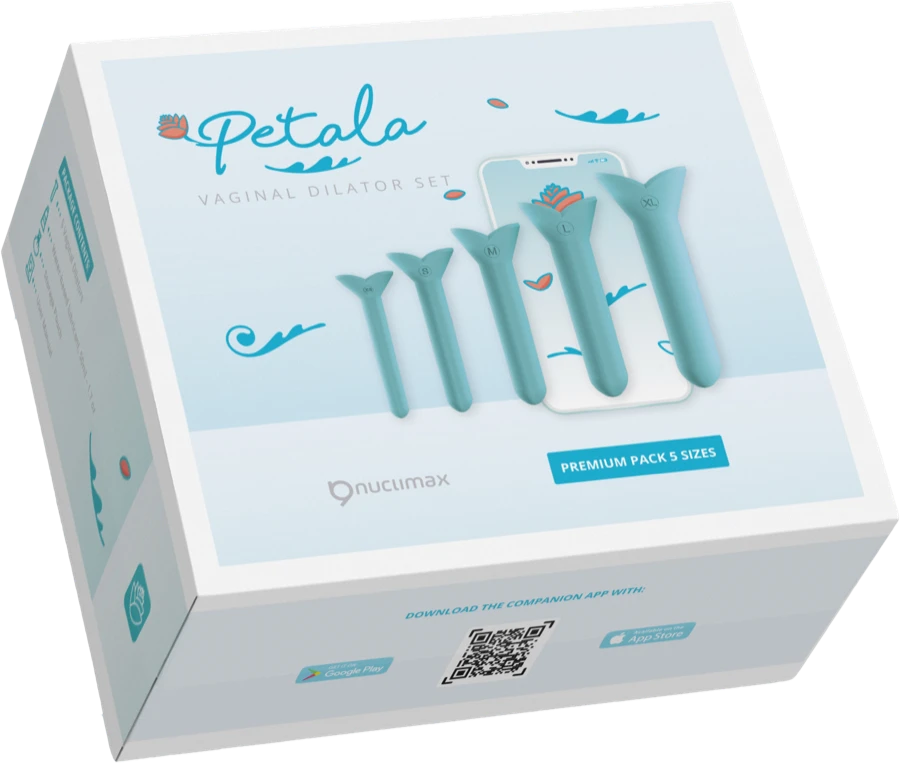
When you are ready to explore dilator therapy, the Petala 5-Pack offers five graduated medical-grade silicone dilators and a companion app to support you through each session — designed for gentle, self-paced progress alongside professional care.
References
[1] World Health Organization. (2023). Endometriosis fact sheet.
[2] As-Sanie, S., Harris, R. E., Napadow, V., Kim, J., Neshewat, G., Kairys, A., … & Clauw, D. J. (2012). Changes in regional gray matter volume in women with chronic pelvic pain: A voxel-based morphometry study. Pain, 153(5), 1006–1014.
[3] Aredo, J. V., Heyrana, K. J., Karp, B. I., Shah, J. P., & Stratton, P. (2017). Relating chronic pelvic pain and endometriosis to signs of sensitization and myofascial pain and dysfunction. Seminars in Reproductive Medicine, 35(1), 88–97.
[4] Bergeron, S., Corsini-Munt, S., Aerts, L., Rancourt, K., & Rosen, N. O. (2015). Female sexual pain disorders: A review of the literature on etiology and treatment. Current Sexual Health Reports, 7(3), 159–169.
Ready to start your journey to pain-free intimacy?
Shop Petala 5-Pack