
Last updated:
Breaking the Silence: Personal Journeys to Overcoming Intimate Pain
Read personal journeys of women overcoming vaginismus, vulvodynia, and postpartum pain. Evidence-based guidance and practical steps for reclaiming intimacy and confidence.

Pain during sex and vulvar pain affect a substantial minority of women. In a British population survey, 7.5% of sexually active women reported painful sex lasting at least three months in the previous year, and population-based vulvodynia studies have found that many affected women either never seek care or go undiagnosed when they do [2][4][5]. Whether the cause is vaginismus, vulvodynia, postpartum scarring, or another condition entirely, stigma and fragmented care can leave women feeling isolated for far too long. This article pairs the clinical evidence with illustrative recovery journeys so the path forward feels more concrete and less taboo.
Medical disclaimer: This article is for educational purposes only. Always consult a qualified healthcare professional before beginning any treatment.
Why Do So Many Women Suffer in Silence?
The reasons are layered — and they are systemic, not personal:
- Cultural taboo. Intimate pain is still treated as an embarrassing topic in many healthcare settings, so many women delay speaking openly about it.
- Difficult care pathways. Qualitative research on vaginismus treatment describes a long and arduous journey into care, including difficulty asking for help, invalidation by professionals, and complex referral pathways [3].
- Low diagnosis rates. In population-based vulvodynia research, many women never sought treatment at all, and more than half of those who did seek care reported receiving no diagnosis [2].
- Psychological reinforcement. When pain goes unacknowledged, anxiety and avoidance behaviours build, creating a cycle that makes the original condition harder to treat.
The consequence is clear: women who could recover in months with appropriate care instead suffer for years. Breaking that pattern starts with naming the problem — and recognising that effective, evidence-based treatments exist.
What Are the Most Common Causes of Intimate Pain?
Dyspareunia — the clinical term for pain during intercourse — has a wide range of underlying causes. The three most common are outlined below.
Vaginismus
Vaginismus involves involuntary contractions of the pelvic floor muscles that make vaginal penetration painful or impossible. It can be primary (present from the first attempt at penetration) or secondary (developing after a period of pain-free intercourse). Common triggers include anxiety, trauma, inadequate sex education, and prior painful medical examinations.
The treatment literature supports a multidisciplinary approach. A 2026 systematic review and meta-analysis found benefit across CBT, pelvic floor physiotherapy, vaginal dilators, and combined psychosexual interventions, with integrative approaches performing best overall [6]. For a deeper look at the condition, see Understanding Vaginismus.
Vulvodynia and Vestibulodynia
Vulvodynia is chronic vulvar pain lasting three months or more without a clearly identifiable cause. Vestibulodynia — a subtype localised to the vaginal entrance — is the most common form. Symptoms include burning, stinging, rawness, and hypersensitivity to touch.
Treatment is multidisciplinary and may include topical anaesthetics or hormonal creams, nerve-targeted medication (such as amitriptyline), pelvic floor physiotherapy, and dietary modifications. You can read more about localised approaches in our guide to vestibulodynia treatment options.
Postpartum and Post-Surgical Pain
Pain following childbirth — particularly after perineal tearing or episiotomy — is far more common than most women are prepared for. Contributing factors include scar tissue adhesions, residual muscle tension, nerve damage, and hormonal shifts (especially low oestrogen during breastfeeding).
Rehabilitation typically involves specialised scar massage, pelvic floor physiotherapy, graduated dilator therapy, and open communication with partners. Our article on postpartum recovery with dilators covers the practical steps in detail.
The stories below are illustrative composites based on common treatment patterns described in the literature and in pelvic pain care. They are included to make the recovery process easier to picture, not as identifiable patient case reports.
How Did Emma Overcome Vaginismus?
Emma, 31, had lived with primary vaginismus since her late teens. She could not use tampons, found smear tests excruciating, and had never been able to have comfortable penetrative intercourse. For years, she believed she was simply “broken.”
Her turning point came at 28, when she discovered an online peer-support community and, for the first time, learnt the clinical name for what she had been experiencing. Within a month, she had booked an assessment with a pelvic floor physiotherapist who specialised in vaginismus.
Emma’s treatment programme lasted approximately nine months and included:
- Weekly pelvic floor physiotherapy — her physiotherapist used internal assessment to identify the specific muscles in spasm and taught Emma targeted relaxation techniques.
- Graduated dilator therapy — starting with the smallest size and progressing at her own pace, typically spending two to three weeks at each size. She practised at home for 10–15 minutes, four to five times per week.
- Cognitive-behavioural therapy (CBT) — eight sessions focused on catastrophic thinking patterns around penetration, body-image anxiety, and the shame she had internalised from years of silence.
“I learned to be patient with myself and to celebrate small victories. The first time I moved up a dilator size without pain, I actually cried — it felt like getting a part of myself back.”
Emma now speaks openly about her experience. Her recovery was not instant, but it was steady — and it began the moment she stopped treating the problem as unspeakable. If you are considering dilator therapy, our dilator therapy timeline outlines what a typical progression looks like.
What Helped Sophia Heal from Vulvodynia?
Sophia, 29, developed provoked vestibulodynia in her late twenties. The constant burning sensation at her vaginal entrance affected every dimension of her life — her ability to work at a desk for long periods, her relationship, and her mental health. What compounded the suffering was being dismissed repeatedly: by a GP who attributed it to stress, by a gynaecologist who found “nothing wrong,” and by well-meaning friends who suggested she simply needed to relax.
Sophia refused to stop looking for answers. She researched vulvodynia independently, joined a specialist patient forum, and eventually secured a referral to a vulvar pain clinic.
Her treatment plan, built over two years, included:
- Low-dose amitriptyline (10 mg, gradually increased to 30 mg) — prescribed to reduce nerve hypersensitivity.
- Topical oestrogen and lidocaine — applied to the vestibule before physiotherapy sessions and, later, before intimacy.
- Pelvic floor physiotherapy with biofeedback — weekly sessions for six months, then fortnightly, to address the involuntary guarding her muscles had developed.
- Dietary modifications — reducing oxalates and inflammatory foods, guided by a dietitian experienced in chronic pain conditions.
“The most important lesson I learned was to be my own advocate. You know your body. If someone isn’t listening, find someone who will.”
Sophia’s recovery was not linear — there were flare-ups and setbacks — but the overall trajectory was consistently towards improvement. After 18 months of combined treatment, she reported an 80% reduction in pain severity.
How Did Mia Rebuild Intimacy After Childbirth?
Mia, 34, had a straightforward pregnancy but a prolonged second stage of labour that resulted in a third-degree perineal tear and subsequent surgical repair. In the months that followed, she experienced sharp pain during intercourse, a persistent feeling of tightness, and a deep reluctance to be physically close to her partner — something she had not anticipated and felt she could not admit.
At her six-month postnatal check, she finally raised the issue with her midwife and was referred to a pelvic health physiotherapist. The assessment identified significant scar tissue adhesion and elevated resting tone in her pelvic floor muscles.
Mia’s rehabilitation programme included:
- Scar tissue mobilisation — her physiotherapist performed gentle manual techniques on the perineal scar, and Mia was taught to continue this at home using a small amount of natural oil.
- Graduated dilator therapy — beginning with the second-smallest size to gently stretch the scarred tissue and desensitise the area, practising every other day for 10 minutes.
- Pelvic floor relaxation exercises — focusing on “down-training” rather than strengthening, as her muscles were already too tense. Our guide to pelvic floor exercises explains the difference between strengthening and relaxation work.
- Couples communication sessions — two sessions with a psychosexual therapist helped Mia and her partner develop a shared language for discussing comfort, pace, and boundaries.
“Postpartum healing isn’t just about the baby — it’s about taking care of yourself too. I wish someone had told me that earlier.”
Within five months of beginning treatment, Mia was able to resume comfortable intimacy. She credits the combination of professional guidance, the right tools, and honest communication with her partner.
What Steps Can You Take to Start Your Recovery?
If any of these stories resonate with you, the following steps offer a practical starting point.
1. Seek the right professional
Not every clinician has specialist training in pelvic pain. Look specifically for:
- A pelvic floor physiotherapist (sometimes called a pelvic health physiotherapist)
- A gynaecologist with a sub-interest in vulvar pain or sexual pain
- A psychosexual therapist if psychological factors are significant
If you are unsure whether your symptoms warrant professional assessment, our article on when to see a doctor can help you decide.
2. Educate yourself from reliable sources
Understanding your condition reduces fear and restores a sense of agency. Peer-reviewed journals, patient organisations (such as the Vulval Pain Society or the Vaginismus Network), and evidence-based blogs are all valuable resources.
3. Consider psychological support alongside physical treatment
The psychological and physical dimensions of intimate pain are deeply intertwined. Across vaginismus and provoked vestibulodynia research, the best outcomes tend to come from multidisciplinary care that combines physical treatment with psychological support rather than treating them as separate problems [1][6].
4. Explore graduated dilator therapy
Vaginal dilators are one of the most widely recommended tools for conditions involving pain with penetration. They work through gradual desensitisation — gently retraining the muscles and nervous system to associate penetration with comfort rather than threat. If you are new to dilators, start with our silicone dilators 101 guide and the dilator size guide to understand how to choose the right starting point.
5. Practise self-compassion on the harder days
Recovery from intimate pain is rarely linear. There will be weeks of noticeable progress and weeks where things feel stuck. Both are normal. Techniques that support the process include diaphragmatic breathing, mindfulness meditation, warm baths before dilator practice, and journalling.
Why Does Sharing Your Story Matter?
Stigma is one of the biggest barriers to treatment. When intimate pain is treated as shameful or unspeakable, women delay seeking help — and the conditions worsen. Population studies and qualitative research point in the same direction: women often struggle to ask for help, and even when they do, they may not receive clear recognition or diagnosis straight away [2][3].
You do not have to share publicly. But finding even one person — a friend, a partner, a therapist, or an online community — to speak to honestly can be transformative. Each woman who breaks the silence makes it fractionally easier for the next.
Moving Forward: Your Recovery Is Within Reach
Intimate pain has solutions. Whether your experience involves vaginismus, vulvodynia, postpartum scarring, or another condition, effective treatments exist — and women recover every day. The research supports that conclusion, and the illustrative journeys of Emma, Sophia, and Mia help make it easier to picture.
The path forward involves finding the right clinical team, using evidence-based tools, addressing the psychological as well as the physical, and extending yourself the same patience you would offer someone you love.
You are not broken. You are not alone. And your journey towards pain-free intimacy is absolutely within reach.
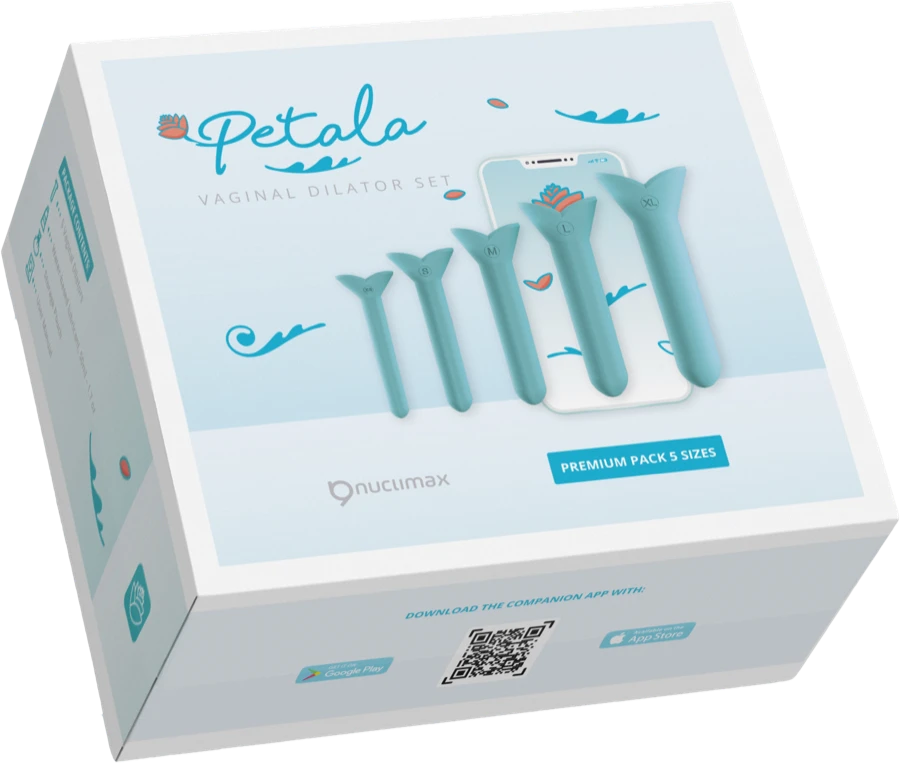
The Petala 5-Pack was designed to support exactly this kind of recovery — five graduated medical-grade silicone dilators paired with a companion app that guides you through each stage of your rehabilitation at your own pace.
Frequently Asked Questions
How common is pain during intercourse? In the British population survey, 7.5% of sexually active women reported painful sex lasting at least three months in the previous year [4]. Lifetime and population estimates vary depending on how studies define the condition, but the broad takeaway is the same: this is common, not rare.
How long does recovery from vaginismus typically take? Recovery timelines vary depending on severity, the treatment mix, and individual factors. A 2026 systematic review found meaningful improvement across several treatment approaches, but the included studies used different outcome measures and follow-up periods, so there is no single universal timeline [6]. Consistency with home practice and the right professional support both matter.
Can intimate pain develop after years of pain-free intercourse? Yes. Secondary vaginismus and acquired vulvodynia can develop at any stage of life. Common triggers include childbirth, surgery, hormonal changes (such as those occurring during menopause or while breastfeeding), infections, relationship difficulties, and traumatic experiences. Our guide to navigating menopause discusses hormone-related changes in more detail.
Do I need a referral to see a pelvic floor physiotherapist? This depends on your country and healthcare system. In the UK, you can self-refer to many NHS pelvic health physiotherapy services or access private practitioners directly. In other countries, a GP or gynaecologist referral may be required. Either way, seeking specialist assessment is a worthwhile first step.
Is it normal to feel emotional during dilator therapy? Completely. Dilator therapy can bring up a range of emotions — frustration, grief, relief, and sometimes tears of progress. These responses are normal and are often a sign that both physical and emotional healing are taking place. Many women find it helpful to combine dilator therapy with psychological support, whether through formal CBT or through journalling and peer support.
References
[1] Brotto, L. A., Yong, P., Smith, K. B., & Sadownik, L. A. (2015). Impact of a multidisciplinary vulvodynia program on sexual functioning and dyspareunia. The Journal of Sexual Medicine, 12(1), 238–247.
[2] Harlow, B. L., Kunitz, C. G., Nguyen, R. H. N., Rydell, S. A., Turner, R. M., & MacLehose, R. F. (2014). Prevalence of symptoms consistent with a diagnosis of vulvodynia: Population-based estimates from 2 geographic regions. American Journal of Obstetrics and Gynecology, 210(1), 40.e1-40.e8.
[3] Macey, K., Gregory, A., Nunns, D., & Das Nair, R. (2015). Women’s experiences of using vaginal trainers (dilators) to treat vaginal penetration difficulties diagnosed as vaginismus: A qualitative interview study. BMC Women’s Health, 15, 49.
[4] Mitchell, K. R., Geary, R., Graham, C. A., Datta, J., Wellings, K., Sonnenberg, P., Field, N., Nunns, D., Bancroft, J., Jones, K. G., Johnson, A. M., & Mercer, C. H. (2017). Painful sex (dyspareunia) in women: Prevalence and associated factors in a British population probability survey. BJOG: An International Journal of Obstetrics & Gynaecology, 124(11), 1689–1697.
[5] Reed, B. D., Harlow, S. D., Sen, A., Legocki, L. J., Edwards, R. M., Arato, N., & Haefner, H. K. (2012). Prevalence and demographic characteristics of vulvodynia in a population-based sample. American Journal of Obstetrics and Gynecology, 206(2), 170.e1-170.e9.
[6] Zulfikaroglu, E. (2026). Vaginismus treatment: A systematic review and meta-analysis of contemporary therapeutic approaches. The Journal of Sexual Medicine, 23(1), qdaf295.
Ready to start your journey to pain-free intimacy?
Shop Petala 5-Pack